
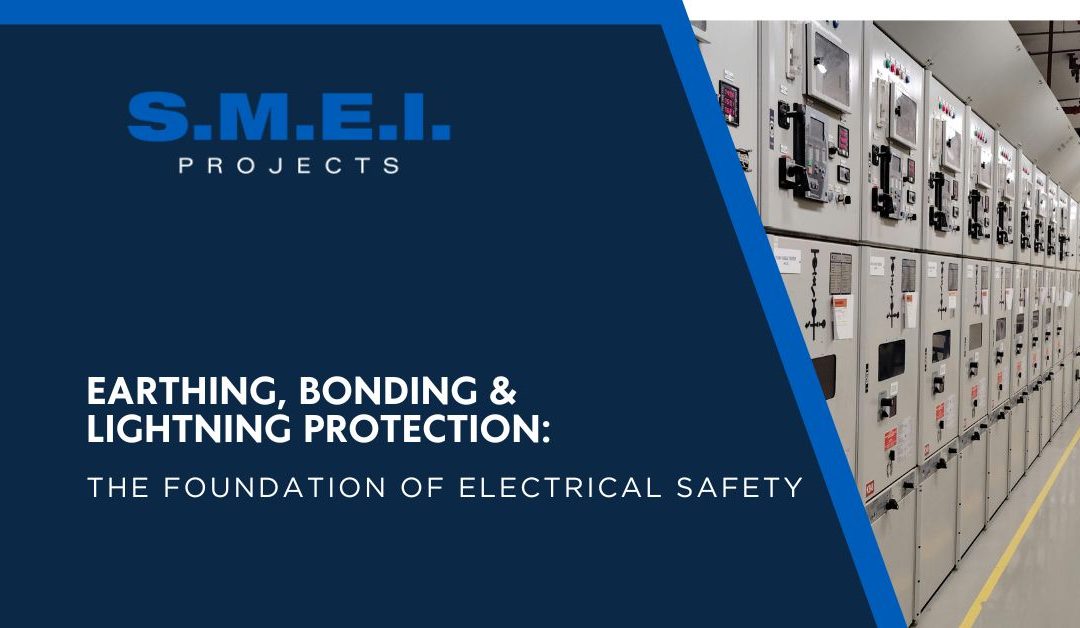
Electrical systems in mining operations often bring to mind large transformers, switchgear, and control panels. Yet behind every safe and reliable installation lies a less visible but equally important system: earthing, bonding, and lightning protection.
These systems provide the electrical reference and protection pathways that help safeguard personnel, equipment, and infrastructure from fault currents, transient overvoltages, and lightning events. In industrial environments where downtime and safety risks carry significant consequences, properly designed grounding systems form a critical foundation for electrical reliability.
Why Earthing Matters in Mining Environments
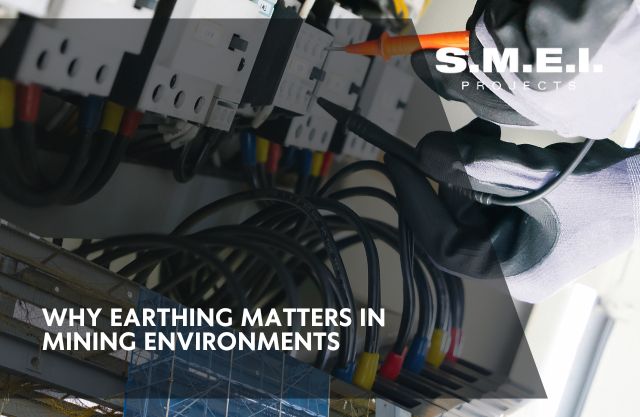
In essence, earthing provides a low-resistance path for electrical current to safely discharge into the ground in the event of a fault. In heavy industrial and mining environments where where large electrical loads operate across interconnected systems, a robust earthing system prevents dangerous voltages from building up on exposed metalwork.
Without proper earthing:
- Fault currents can cause electric shock hazards.
- Equipment can be damaged by transient overvoltages.
- Protection devices may fail to operate correctly.
- Static build-up can ignite flammable gases or dust.
Every transformer, MCC, control panel, lighting mast, and cable tray relies on a properly designed and installed earthing network to maintain operational safety.
Bonding: Completing the Protection Loop
While earthing provides the discharge path, bonding connects all metallic structures and equipment to the same reference potential helping minimise dangerous voltage differences between conductive surfaces..
In mining environments with large steel structures, conveyors, and equipment housings, bonding is essential for:
- Personnel safety – preventing step and touch potentials.
- Equipment protection – equalising potential to avoid arcing or damage.
- System performance – stabilising reference voltages for instrumentation accuracy.
At S.M.E.I. Projects, our teams incorporate bonding of metallic structures including cable racks, trays, and plant room busbars as part of the electrical installation process. This approach helps create a more unified electrical network designed to support safe operation under demanding industrial conditions.
Lightning Protection in Harsh Mining Conditions
Mining sites, particularly open-pit operations, are highly exposed to lightning strikes. With towering process structures, cranes, and high mast lighting, mines often become natural targets for electrical discharge.
An effective Lightning Protection System (LPS) is designed to intercept, conduct, and safely dissipate the enormous energy of a lightning strike which can exceed 200,000 amps without allowing it to pass through critical assets or personnel.
A Complete LPS Includes:
- Air Termination Network – Lightning rods, masts, or catenary wires designed to intercept strikes.
- Down Conductors – Copper or aluminium paths that safely channel energy to earth.
- Earth Termination Network – A buried grid or electrode system that disperses current into the ground.
- Surge Protection Devices (SPDs) – Installed on electrical and communication lines to prevent transient overvoltage damage.
S.M.E.I. Projects designs and installs integrated lightning protection systems that conform to SANS 10313 and IEC 62305, helping support both physical and electrical protection.
Designing for the Real World: Soil, Structure, and Standards
No two mining sites are the same. Soil resistivity, moisture content, and geology all influence how effectively a grounding system performs. A one-size-fits-all approach simply doesn’t work.
That’s why S.M.E.I. Projects takes a site-specific approach to earthing design:
- Conducting soil resistivity tests before installation.
- Using the results to design optimal electrode layouts and conductor sizing.
- designing grounding systems to meet SANS standards and project-specific requirements, typically targeting low resistance values suitable for the facility’s protection requirements.
For structures, we ensure all steelwork is interconnected to the main earth grid creating a continuous protection system across the entire plant or site.
Installation Best Practices: What Sets S.M.E.I. Apart
The effectiveness of an earthing or lightning system depends as much on the quality of installation as on design. Our teams follow established procedures intended to support compliance, durability, and future maintenance access.
Our Installation Approach Includes:
- Copper and Bare Conductor Installation: Properly routed and protected against mechanical damage and corrosion.
- Exothermic Welding (Cadweld): Provides permanent, low-resistance joints that outperform mechanical clamps.
- Earth Pits and Inspection Points: Installed for routine testing and maintenance access.
- Cable Tray and Rack Bonding: Ensures continuity across electrical and instrumentation supports.
- Integration with Structural Works: Earthing and lightning protection are incorporated early in SMPP planning, reducing retrofit challenges.
The result is a grounding system designed for durability and measurable verification backed by full QA/QC documentation.
Testing, Verification, and Maintenance
Once installation is complete, verification is critical.
S.M.E.I. Projects testing activities include verification steps such as:
- Earth resistance and continuity tests.
- Lightning protection continuity tests.
- Loop impedance and bonding verification.
- Documentation and certification witnessed by the client or engineer.
Periodic testing is commonly recommended in industrial environments, particularly where soil conditions may change over time, particularly in high-risk environments or where seasonal changes affect soil conditions to ensure continued performance over time.
Earthing Systems in Mineral Processing Facilities
In large mineral processing facilities, earthing systems often consist of extensive buried conductor grids interconnected with structural steel, electrical plant rooms, and equipment foundations. These grounding networks are typically designed using site-specific soil resistivity measurements and tested after installation to verify performance against project requirements and applicable standards.
In facilities with tall structures, high mast lighting, and exposed process equipment, lightning protection systems may also include air termination networks, down conductors, and surge protection devices integrated into the site’s electrical infrastructure.
Integration with EC&I and SMPP Works
Because S.M.E.I. Projects executes both SMPP and EC&I scopes, earthing and lightning protection are seamlessly integrated across structural and electrical disciplines.
- Structural steel is bonded during fabrication or erection.
- Electrical teams connect earth bars, trays, and plant rooms into the master grid.
- Commissioning engineers verify the system before energisation.
This integrated delivery avoids the disconnects that occur when multiple contractors split responsibility saving time and ensuring system integrity from day one.
The Cost of Getting It Wrong
It’s easy to underestimate the importance of grounding systems until something goes wrong.
A single lightning strike or ground fault can lead to:
- Equipment damage costing millions.
- Production losses from extended outages.
- Safety incidents that harm personnel and reputations.
Investing in professional earthing and lightning protection is not an added cost it plays an important role in protecting operational continuity.
Conclusion: Safety Starts from the Ground Up
Earthing, bonding, and lightning protection form a critical part of electrical infrastructure in mining and industrial facilities. When designed, installed, and maintained according to recognised standards, these systems help manage electrical faults, dissipate lightning energy, and reduce the risk of equipment damage or personnel exposure.
By integrating grounding systems into both structural and electrical works, projects can achieve greater coordination between engineering disciplines and improve long-term system reliability. From initial design through installation and verification, earthing systems play an essential role in supporting safe and resilient operations.
S.M.E.I. Projects engineering safety, one connection at a time.
Sources
NSSL NOAA National Severe Storms Laboratory
Electrical Engineering Portal | Electrical Engineering Portal
IEEE Grounding and Bonding Guidance