
Delivering infrastructure in Africa’s remote mining regions is not for the faint of heart. From inaccessible roads and dense bush to community integration and workforce logistics, each project demands resilience, adaptability, and deep experience on the ground. For project managers and engineering firms like S.M.E.I. Projects, success lies in turning logistical nightmares into carefully orchestrated operations.
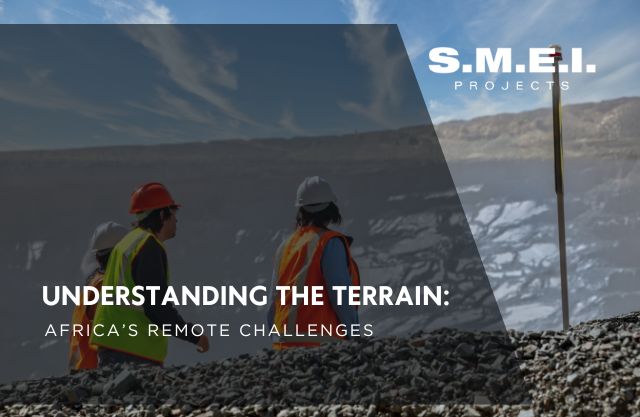
Understanding the Terrain: Africa’s Remote Challenges
The vastness of Africa’s mining territories – spanning deserts, dense bushveld, and mountainous zones – presents unique complications rarely seen in more urbanised regions. In places like northern Mozambique, teams may face thick vegetation and seasonal flooding, while Botswana’s Kalahari sands challenge both machinery and transport consistency.
Poor road infrastructure further compounds delays. Heavy equipment must often traverse unsealed roads, riverbeds, or multi-border crossings, all while navigating permit and customs delays. These hurdles often result in increased costs, unpredictable lead times, and equipment damage.
“Getting to site can be half the battle. It’s not uncommon to see helicopters used for urgent part deliveries or site assessments.” – S.M.E.I. Projects, Site Manager
Strategic Planning: The Heart of Remote Project Success
To overcome these challenges, leading firms adopt logistics-first project planning. At S.M.E.I. Projects, we treat logistics as a critical workstream, not a back-office task. This includes:
- Establishing secure transport corridors and staging areas
- Mapping alternate access routes in case of floods or washouts
- Coordinating with local customs and border officials early
- Planning for airlifts or barge transportation when roads are impassable
This level of planning enables us to stick to timelines even in highly volatile environments.
Beyond the Build: Supporting the Workforce and Community
Remote project success doesn’t end with construction, it hinges on how people live and work onsite. Often, these locations lack basic infrastructure: no housing, limited medical access, and few schools. Poor living conditions can lead to high staff turnover and erode morale.
This is why experienced project managers invest early in:
- Worker camp development with housing, recreation, medical care
- Rotational schedules to reduce burnout and retain skilled labour
- Community engagement programmes to foster trust and social licence to operate
- Local hiring and skills transfer, which not only reduces costs but builds long-term sustainability
“You can’t helicopter in a solution. You’ve got to be on the ground, listening, training, and solving problems as they arise.” – S.M.E.I. Projects, Site Manager
Environmental & Social Insight: Navigating the Wild Responsibly
Mining in remote environments often requires intense scrutiny from environmental regulators and affected communities. Companies with experience in remote mining project management in Africa begin ESIA processes early and train project teams in cultural and ecological sensitivity.
From environmental conservation to fair hiring practices, this proactive approach helps reduce protest action, reputational damage, and regulatory delays.
Agility: The Final Ingredient
Despite best-laid plans, surprises are inevitable. Sandstorms in Namibia. Bridge collapses in Zambia. Political unrest at a border post. What sets successful teams apart is their ability to pivot without compromising safety or budget.
S.M.E.I. Projects thrives in remote execution by embedding contingency strategies, rapid decision-making frameworks, and local partnerships into every project plan. We don’t just plan for the ideal – we prepare for the unpredictable.
Conclusion: Managing the Unmanageable
Remote mining project management in Africa isn’t just about building infrastructure – it’s about building resilience. With decades of experience, strategic foresight, and a people-first mindset, S.M.E.I. Projects continues to deliver high-stakes engineering solutions in some of the continent’s most unforgiving environments.
Because in the most remote places on earth, expertise isn’t optional – it’s everything.