
Fabricated steel only creates value when it reaches site safely, correctly sequenced and ready for installation. In mining, SMPP and industrial construction, logistics is not simply a transport activity. It is the operational link between fabrication, corrosion protection, dispatch control, client safety approval, site receipt and installation readiness.
S.M.E.I. Projects chose a different model. We operate through an integrated fabrication-to-site model. While S.M.E.I. is widely recognised for site construction and SMPP execution, the logistics capability behind that delivery is a critical part of the fabrication value chain. Our owned transport capability, expediting controls, plant safety systems and site installation experience allow us to support clients from workshop release through to delivery and site execution
What we operate
S.M.E.I.’s transport and plant capability is structured around the practical requirements of fabrication delivery and site support. Loads may include structural members, fabricated assemblies, project materials, urgent components, small tools, supervisor movements and site-support requirements. For local deliveries, load control is typically supported by delivery notes, dispatch records and load manifests. For cross-border deliveries, documentation may include a waybill or road consignment note, commercial invoice, packing list, customs or export documentation, certificate of origin where applicable, permits, insurance documentation and any client-specific requirements.
| Fleet / plant capability | Role in the logistics and site-support chain |
| Owned transport fleet | Supports local, national and selected cross-border delivery requirements for fabricated steel, structural components, project materials and site-support items. |
| Heavy-load and trailer capability | Supports movement of structural steel, fabricated assemblies and project-specific loads, subject to route planning, load configuration, permitting and client site requirements. |
| Hiab / crane-truck capability | Supports controlled offloading where suitable and approved, subject to equipment certification, client site approval and trained operator availability. |
| Medium trucks and LDVs | Supports site support, urgent components, smaller loads, supervisor movement and document or material delivery requirements. |
| Fleet management controls | Plant and vehicles are maintained by dedicated mechanics at S.M.E.I’s facility, checked daily before use, inspected regularly by the vehicle coordinator and operated by trained and authorised operators. |
Loading, handling and dispatch are planned in line with applicable lifting procedures, project requirements, client safety standards and site-specific risk controls. S.M.E.I.’s plant and equipment are certified, checked daily before use and maintained by dedicated mechanics at our facility. Where trucks, cranes, forklifts, telehandlers or other plant are required on a client site, even for delivery only, the equipment must first be submitted and approved in line with the client’s safety requirements.
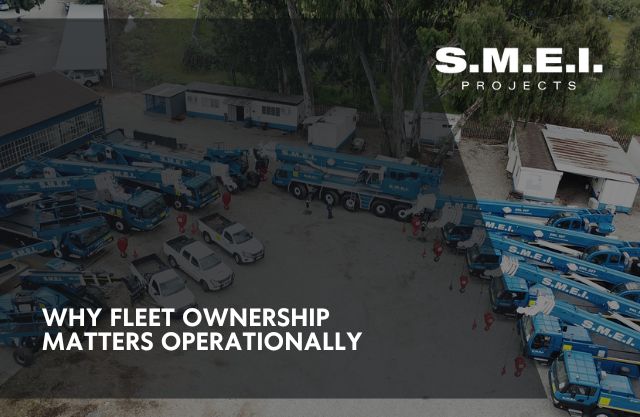
Why fleet ownership matters operationally
Owning the fleet is operational control. We are not beholden to third-party transport schedules. We do not pay re-sequencing fees when site priorities shift. We can respond to urgent site needs, early border crossings, same-day equipment changes, accelerated returns, without negotiating around another operator’s constraints. In practical terms this delivers four advantages that directly affect project schedule: Controlled logistics gives the project team more visibility and accountability across the movement of fabricated steel and site-support equipment. It allows dispatch planning to be aligned with fabrication progress, corrosion protection status, site readiness, safety approval requirements and installation priorities, rather than treating transport as a separate afterthought.
Dispatch in erection sequence, not workshop sequence. Where project conditions allow, dispatch planning can be aligned with the site programme so that fabricated steel arrives in a logical sequence for offloading, staging and installation. This helps reduce congestion on site and supports better coordination between fabrication, delivery and construction teams.
Load protection designed by our own riggers. Load planning and handling are managed according to the nature of the fabricated items, site access requirements, lifting considerations, transport limitations and applicable safety controls. This supports safer movement of structural steel, fabricated assemblies and project materials from dispatch through to site receipt.
Transport documentation travels with each load. Each delivery is supported by the required load, dispatch and compliance documentation. For local deliveries, this may include delivery notes, dispatch records or load manifests. For cross-border deliveries, documentation may include waybills or road consignment notes, commercial invoices, packing lists, customs/export documentation, permits, certificates of origin where applicable and client-specific requirements. Supporting QA/QC records remain linked to the relevant fabricated items to support traceability and close-out requirements.
Predictable cost rather than variable rates. Internal fleet and plant coordination supports improved cost visibility and planning discipline. Final transport and plant costs remain subject to project scope, distance, route requirements, load configuration, fuel pricing, permitting, border requirements and site conditions. For clients, the value lies in stronger coordination and fewer handover gaps. By connecting fabrication, dispatch planning, documentation control, safety requirements and site delivery visibility, S.M.E.I. helps reduce avoidable delays and supports a more controlled route from workshop release to site installation.
Dispatch control starts before loading
Structural steel delivery requires more than transport availability. It requires planning around fabrication progress, corrosion protection, inspection status, site access, delivery documentation, safety requirements and installation readiness.
S.M.E.I.’s delivery approach is designed to support smoother handover between workshop release and site receipt. Where project conditions allow, dispatch planning is aligned with the site programme so that fabricated steel arrives in a practical sequence for offloading, staging and installation.
The objective is to reduce avoidable delays at the point of delivery. By coordinating fabrication status, dispatch requirements, documentation and site readiness, S.M.E.I. helps clients maintain better visibility over fabricated items moving from the workshop environment to the construction site.

Plant, lifting and transport safety controls
Safe delivery depends on suitable equipment, competent operators and compliance with project and client requirements. S.M.E.I.’s plant, lifting and transport resources are managed through structured inspection, maintenance and safety controls to support safe loading, delivery, offloading and site interface activities.
Where trucks, cranes, telehandlers, forklifts or other plant are required on client sites, equipment is submitted for approval in line with the applicable site requirements. This supports compliance with client safety expectations and helps ensure that plant and equipment used on site are suitable for the task.
This approach reinforces S.M.E.I.’s broader safety culture and supports controlled execution across fabrication, logistics and site delivery activities.
Cross-border delivery requires structured compliance planning
Cross-border steel delivery introduces additional planning considerations, including route requirements, customs and export documentation, permits where applicable, delivery timing, site access, load requirements and destination-specific compliance.
For mining and industrial projects across Southern Africa, these requirements must be considered before dispatch, not after the load has left the facility. Early planning helps reduce avoidable delays, supports better coordination with site teams and improves delivery readiness for fabricated steel and project materials.
S.M.E.I.’s experience in mining, industrial construction and cross-border project support enables the business to plan delivery requirements in a structured and practical way, while keeping the focus on safety, compliance and project continuity.
Project visibility supports better delivery decisions For mining, SMPP and industrial projects, delivery visibility is critical. The value for clients is not the internal system itself. The value is clearer communication, better coordination and reduced risk of steel arriving without the correct documentation, readiness or site alignment. Operational lessons from fabrication logistics
Large industrial fabrication projects require coordination across fabrication, corrosion protection, inspection, expediting, transport, client safety approval, site receipt and installation. Logistics is where these streams converge. A load is only successful when it reaches site safely, correctly documented, traceable, sequenced and ready for the next stage of construction.
Corrosion protection requires active expediting and live tracking
Where corrosion protection, inspection, NDT or other specialist processes form part of the fabrication scope, coordination must remain connected to the wider project programme.
S.M.E.I.’s expediting and project control approach helps maintain visibility across these interfaces so that delivery planning is based on current project information rather than isolated updates. This supports better readiness, fewer handover gaps and improved coordination between workshop, supplier and site requirements.
What “on-time delivery” actually means
In logistics, “on-time” usually means dispatched on schedule. What matters on a construction site is whether steel arrives when the erection team is ready, in the right sequence for the next lift, with complete transport documentation, and with no missing or damaged pieces. We measure ourselves against those metrics because our site teams live with the consequences. Accountability does not end at the workshop gate. It runs all the way to the foundation bolts.
Why this matters to the buyer
For mining and industrial procurement teams, the question is not whether a fabricator can deliver steel, most can. The question is whether they can deliver it integrated with everything else they have committed to: the schedule, the erection sequence, the transport documentation, the cross-border compliance, the contingency response to a shifting site priority. S.M.E.I. Projects operates a large owned transport fleet, a 30 000 m² laydown yard, owned lifting and material-handling capability, a cross-border delivery network across six Southern African countries, and Strumis as the digital layer that connects them. For major capital projects in mining, petrochemical, oil and gas, energy, and material-handling sectors, that integration is not a feature. It is the operational basis on which the rest of the schedule depends. For clients planning mining, industrial, SMPP, EC&I, fabrication or renewable energy infrastructure projects, S.M.E.I. offers more than delivery. We offer controlled execution from fabrication through to site installation.