
In any large-scale mining operation, power is the lifeblood of productivity. From crushers and conveyors to pump stations and processing plants, uninterrupted electrical supply is what keeps production moving. At the heart of that reliability lies one often-overlooked system, Medium and High Voltage (MV/HV) switchgear.
Switchgear is the first line of defence in protecting electrical networks from overloads, faults, and failures. When engineered, installed, and commissioned correctly, it not only safeguards equipment but also extends the life of the entire power distribution system. For companies operating in Africa’s demanding mining conditions, switchgear reliability isn’t optional, it’s essential.
Understanding MV/HV Switchgear in Mining Operations
In simple terms, switchgear refers to the assemblies that control, protect, and isolate electrical circuits.
At medium and high voltages – typically between 1 kV and 36 kV – switchgear connects substations, transformers, and motor control centres (MCCs) to the electrical network.
In mining and heavy industrial contexts, switchgear serves several critical functions:
- Protection: Detects faults and disconnects affected sections to prevent cascading failures.
- Control: Enables operators to safely energise, isolate, or reroute power.
- Monitoring: Tracks voltage, current, and system health across distributed assets.
Without robust switchgear systems, a single fault could halt production across entire plant sections, costing millions in lost output and recovery time.
The Challenge of Reliability in Harsh Environments
Mining sites present unique challenges for electrical infrastructure:
- Dust, vibration, and high temperatures accelerate wear and corrosion.
- Long cable runs increase voltage drop and require precise load balancing.
- Frequent load changes – from heavy equipment start-ups to conveyor cycles – create stress on electrical components.
In these conditions, reliability depends as much on installation quality and maintenance discipline as on equipment specification. Poorly installed or inadequately earthed switchgear can lead to insulation breakdowns, tripping, or catastrophic failure.
That’s why the installation and commissioning of MV/HV switchgear must be handled by experienced EC&I teams who understand both the engineering principles and site realities of mining operations.
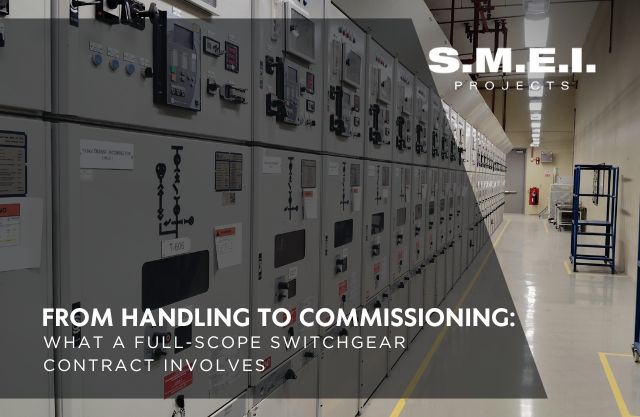
From Handling to Commissioning: What a Full-Scope Switchgear Contract Involves
At S.M.E.I. Projects, switchgear work doesn’t start when the equipment arrives, it starts in planning.
A typical scope covers every phase from logistics to commissioning, ensuring integrity and compliance throughout.
1. Handling and Rigging
MV/HV switchgear and metering panels are precision-built and require controlled handling. SMEI’s rigging and lifting teams use certified equipment and detailed method statements to move units safely into place, protecting both equipment and personnel.
2. Positioning and Fixing
Accurate positioning ensures proper alignment, accessibility, and connection to bus ducts and cable terminations. This includes bolting, earthing, and vibration control in accordance with engineering drawings.
3. Installation Assistance to Vendor
S.M.E.I. Projects works directly with OEMs or vendor engineers to support on-site installation and configuration. This collaboration ensures the manufacturer’s design intent is fully realised, while maintaining site safety and quality standards.
4. Termination and Testing
Cable terminations for MV circuits require certified jointers and strict compliance with insulation and torque specifications.
Testing includes:
- Insulation resistance and continuity checks
- Partial discharge testing
- Functional and interlock verification
- Protection relay calibration
5. Commissioning and Certification
Commissioning is conducted jointly with the vendor and the client’s representatives, ensuring all systems operate under load conditions before handover. SMEI submits complete QA/QC and test documentation for certification and recordkeeping.
Safety and Compliance: Non-Negotiables in Switchgear Installation
Switchgear installations are governed by strict local and international standards, including SANS 10142, IEC 62271, and client-specific safety specifications.
Compliance is not merely a regulatory requirement, it’s a performance imperative.
Key Safety Considerations:
- Earthing and bonding: All metallic components must be bonded to the main plant earth bar.
- Arc flash protection: Proper clearances, barriers, and personal protective equipment (PPE) minimise risk.
- Lock-out procedures: Switchgear rooms require isolation protocols to ensure maintenance safety.
- Environmental control: Temperature and humidity management prevents condensation and corrosion.
S.M.E.I. Projects’ Safety, Health, and Environmental Management Systems ensure that each installation meets the highest standards, from construction through to energisation.
Common Causes of Switchgear Failure – and How to Prevent Them
Even the best equipment can fail if not correctly installed or maintained. Across the mining sector, most switchgear failures trace back to a few common issues:
| Cause | Impact | Prevention |
| Poor cable terminations | Overheating and insulation breakdown | Certified jointers, torque control, quality checks |
| Inadequate earthing | Increased fault current and equipment damage | Regular earth resistance testing |
| Moisture ingress | Corrosion and tracking faults | Sealed enclosures and humidity control |
| Improper mechanical alignment | Faulty operation and tripping | Accurate positioning and vendor assistance |
| Lack of maintenance | Unplanned outages | Scheduled inspections and IR testing |
By addressing these proactively during installation, SMEI ensures system integrity long after handover.
Integration with Broader Electrical Systems
Switchgear doesn’t operate in isolation. It connects upstream to transformers and downstream to MCCs, VSDs, and field equipment.
When managed by separate contractors, these interfaces often create inefficiencies or conflicting priorities.
S.M.E.I. Projects’ multidisciplinary approach, combining structural, mechanical, and EC&I expertise, ensures seamless integration across all systems.
This means that while mechanical teams install plinths or support structures, electrical teams simultaneously position and terminate switchgear assemblies – saving time and avoiding rework.
Switchgear and the Future of Energy in Mining
As African mines transition toward more efficient, sustainable operations, electrical reliability will only grow in importance.
Modern MV/HV switchgear now incorporates advanced monitoring, fault detection, and smart communication capabilities, supporting predictive maintenance and real-time system visibility.
Contractors like S.M.E.I. Projects, who combine installation expertise with modern controls integration, play a vital role in connecting traditional mining infrastructure with future-ready automation systems.
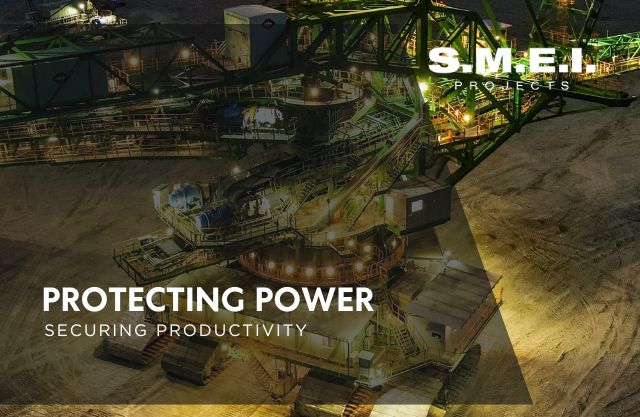
Conclusion: Protecting Power, Securing Productivity
Medium and high voltage switchgear may operate quietly behind the scenes, but in every mine, they hold the power to protect, control, and sustain production.
At S.M.E.I. Projects, our experience in handling, installing, and commissioning MV/HV switchgear ensures the highest levels of safety, performance, and reliability, no matter how challenging the environment.
When power continuity matters, and downtime isn’t an option, trust the partner who builds reliability into every connection.
S.M.E.I. Projects – empowering Africa’s mines with precision-engineered electrical solutions.